
Choose composite decking by checking eight specifications: intended use, board profile, span and support requirements, surface and slip information, moisture and drainage details, fastening system, color and heat exposure, and current technical documentation. A sample board and a price per linear foot are not enough to approve a deck system.
The 8-point composite decking specification checklist
Check | Question to ask | Why it matters |
|---|---|---|
1. Application | Residential deck, rooftop, stairs or commercial walkway? | Loads, code requirements and details differ |
2. Profile | Solid, scalloped or hollow; what width and thickness? | Affects handling, appearance and system compatibility |
3. Support | What joist spacing and blocking are required? | Controls stiffness and warranty compliance |
4. Surface | What texture, wet-use guidance and test data are available? | “Slip resistant” must be product-specific |
5. Water | How are drainage, ventilation and clearances handled? | Moisture management is an assembly issue |
6. Fasteners | Hidden clips, face screws, starter clips and fascia details? | Changes labor, appearance and quantities |
7. Color | How does it look and feel in direct sun? | Dark colors can look and feel different on site |
8. Documents | Installation, care, warranty and applicable reports? | Verifies what the supplier actually supports |
1. Define the application before selecting the board
Begin with the project type, occupancy, location and expected traffic. A backyard platform, exterior stair, restaurant terrace and rooftop deck do not create the same design problem. Record the deck dimensions, height above grade, stair layout, perimeter conditions, drainage path and access for material delivery.
Browse the FastFence composite decking collection only after the application is clear. Product selection should support the drawings—not force the drawings to adapt after ordering.
2. Compare the actual board profile
Confirm board width, thickness, available lengths, edge geometry and whether the board is solid, hollow or otherwise profiled. Ask how ends are finished and whether cut edges will be visible. Do not mix accessories from another product line unless compatibility is confirmed in writing.
FastFence lists CPD-05 as a 5.43-inch by 0.91-inch profile and CPD-03S as an 8.62-inch by 1.02-inch profile. Treat website dimensions as a starting point and verify the current submittal and available lengths before releasing an order.
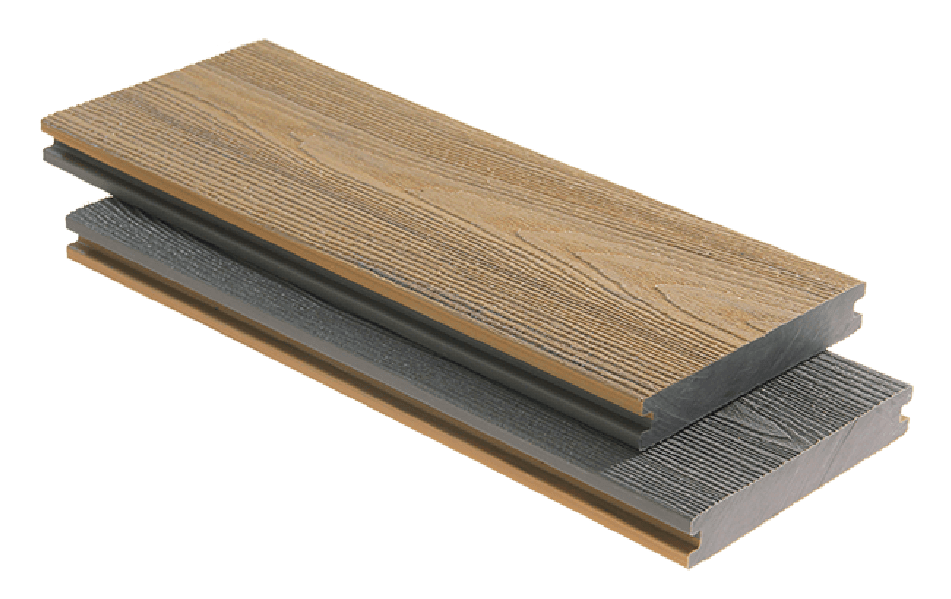
The narrower CPD-05 decking profile and wider CPD-03S decking profile can create different joint rhythms and estimating quantities. The right choice depends on the desired elevation, layout and approved installation system.
3. Verify span, joist layout and blocking
Never infer allowable joist spacing from another brand or a generic internet table. Ask for the manufacturer’s current span and installation requirements for the exact product, including any different rules for diagonal layouts, stairs, concentrated loads or commercial use.
ASTM D7032 establishes procedures for performance ratings of wood-plastic composite and plastic lumber deck boards, including flexural performance, temperature and moisture effects, fastener holding and slip resistance. It does not mean every composite board has the same rating. Request product-specific evidence where the application requires it.
4. Ask what the surface claim is based on
Texture affects appearance and underfoot feel, but it should not be treated as a universal safety guarantee. Ask whether slip information applies to wet or dry conditions, the tested orientation and the current product surface. Keep leaves, oils, algae and construction residue off the walking surface because contaminants can change traction.
FastFence identifies the CPD-05 surface as Ultra Grain. View a full-size sample outdoors and inspect the surface from typical walking and viewing angles.
5. Plan for water, ventilation and expansion
Composite decking is part of an exterior assembly. The design must move water away, allow the support structure to dry and maintain required clearances. Review end gaps, side gaps, perimeter gaps, flashing interfaces and ventilation. Coordinate these details with the current manufacturer instructions and applicable local requirements.
Research from the U.S. Forest Products Laboratory emphasizes that WPC durability is influenced by moisture, sunlight, temperature and biological exposure. Good detailing and maintenance remain important even when a product is marketed as low maintenance.

6. Build a complete fastening and trim schedule
Count starter clips, field clips, screws, plugs, fascia fasteners, end treatments and perimeter trim. Confirm required spacing and whether special tools are needed. For stairs, document tread, riser, stringer and nosing conditions separately.
A complete takeoff should include waste for the actual layout. Angled boards, picture-frame borders, stairs and short usable offcuts can increase waste beyond a simple square-foot calculation.
7. Approve color under real exposure
Screens are not color standards. Request samples and view them at the project. Compare the sample next to the wall finish, railing and landscape materials. Consider direct sun, shade, wet appearance and the visibility of dust.
Ask the supplier about color variation and heat exposure for the exact color and product. Surface temperature depends on color, solar exposure, air temperature, ventilation and other conditions; avoid generic comfort promises.
8. Review documents and the whole order
Before purchase, collect the current product data, installation guide, care instructions, warranty terms and applicable evaluation or test information. Confirm the item numbers and quantities for boards, clips, screws and trim. Use the FastFence downloads page for available resources and ask for current documents when something is not posted.
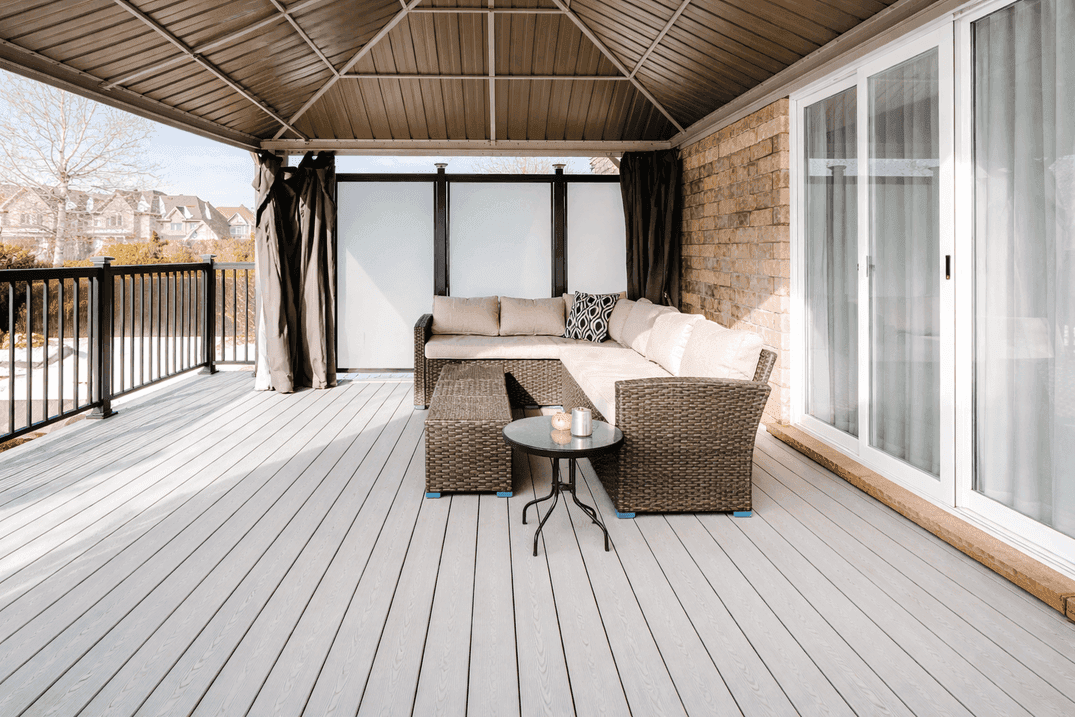
For design inspiration, review the outdoor courtyard deck project, but use current product documentation—not project photography—to approve technical details.
A practical supplier comparison
Send the same information to each supplier: plan dimensions, product and color, board direction, joist spacing, border pattern, stairs, fascia, delivery ZIP code and desired date. Ask each bidder to state exclusions and lead time. Compare the total system price rather than only the board price.
Before you place the order
Confirm field measurements, approved sample, quantities, accessories, delivery access, storage plan and who is responsible for code and permit review. Product information changes, so keep dated copies of the documents used for approval.
If you want a product and quantity review, send the plan, deck dimensions, ZIP code and preferred finish through the FastFence contact page.
Frequently asked questions
What is the most important composite decking specification?
There is no single specification. The product profile, allowable support conditions, fastening method, drainage details and documentation must work together.
Is wider composite decking always faster to install?
Not necessarily. Wider boards reduce the number of rows, but the actual installation time also depends on weight, layout, fastening, borders, stairs and handling.
How much waste should I order?
Waste depends on deck shape, board direction, available lengths, borders and stairs. Build a board-by-board takeoff and confirm the supplier’s recommendation instead of using one percentage for every project.
Can composite decking be installed over existing boards?
Do not assume so. The structure, drainage, clearances and attachment conditions must be evaluated, and installation must follow the current product instructions and applicable requirements.


