
An accurate composite fence quote starts with a complete project description—not just total linear footage. Send the supplier each fence run, finished height, corners and end points, gate quantity and width, slope conditions, product or finish preference, delivery ZIP code, site access information, and target schedule. Add a marked plan and current site photos whenever possible. Then ask the supplier to identify what the quote includes: boards, posts, rails, trims, caps, brackets, fasteners, gate components, packaging, freight, taxes, and any excluded work. This information helps a supplier review the fence as a complete system and makes competing quotes easier to compare. Final quantities and installation requirements should still be checked against the current product documents and actual site conditions.
Composite fence quote information at a glance
Information to send | Why it matters |
|---|---|
Project address or delivery ZIP code | Helps confirm delivery options, freight, taxes, and local service availability |
Individual fence runs | Makes post, corner, end, rail, and board quantities easier to review |
Finished fence height | Affects panel configuration and component quantities |
Gate quantity and width | Gates may require different framing, posts, hinges, latches, and clearances |
Corners, ends, and transitions | Changes the type and number of structural and finishing components |
Grade changes and slopes | May affect layout, cuts, stepped or racked installation, and site labor |
Product and finish preference | Keeps the quote tied to the intended series instead of a generic category |
Photos or marked drawings | Reveals site conditions that are easy to miss in a single total measurement |
Buyer and scope type | Clarifies whether the request is materials only, trade supply, or an installation discussion |
Desired order and delivery dates | Allows the supplier to confirm current availability and logistics |
The best quote request gives the supplier enough context to check the entire fence system before pricing it.
1. Measure every fence run separately
Do not send only one combined number if the project has several sides, offsets, or disconnected sections. Record each straight run separately and label it on a sketch, for example: Run A — 42 feet, Run B — 18 feet, Run C — 36 feet.
Separate measurements help a supplier understand where line posts, end posts, corner posts, gates, and transitions may be needed. They also make it easier to identify areas where a fence meets a wall, structure, existing post, retaining wall, or another fence type.

An installed CEFB-02 fence system from the FastFence product page. A marked layout should distinguish straight runs, corners, end points, and gates.
For early budgeting, measurements can be approximate. Before ordering, the buyer or installer should verify final field dimensions and the product-specific layout.
2. State the finished fence height
Provide the desired finished height for every run. If the project changes height—for example, six feet along a side yard and four feet near a front setback—show the transition point on the sketch.
Finished height is not the same as the length of one board. The number and arrangement of boards depend on the product profile, exposed coverage, rails, clearances, and installation method. Use the current technical sheet for the selected fence series when finalizing quantities.
If a local rule, permit, neighborhood requirement, pool barrier rule, or design standard applies, flag that requirement for the project team. A material supplier can provide product information, but the responsible designer, contractor, and property owner should confirm local compliance.
3. List every gate and opening
For each gate, provide:
Intended use: pedestrian, equipment, or vehicle access.
Approximate clear opening width.
Swing direction, if known.
Single-leaf or double-leaf preference.
Latch, lock, closer, or access-control requirements.
Nearby walls, steps, slopes, utilities, or obstructions.
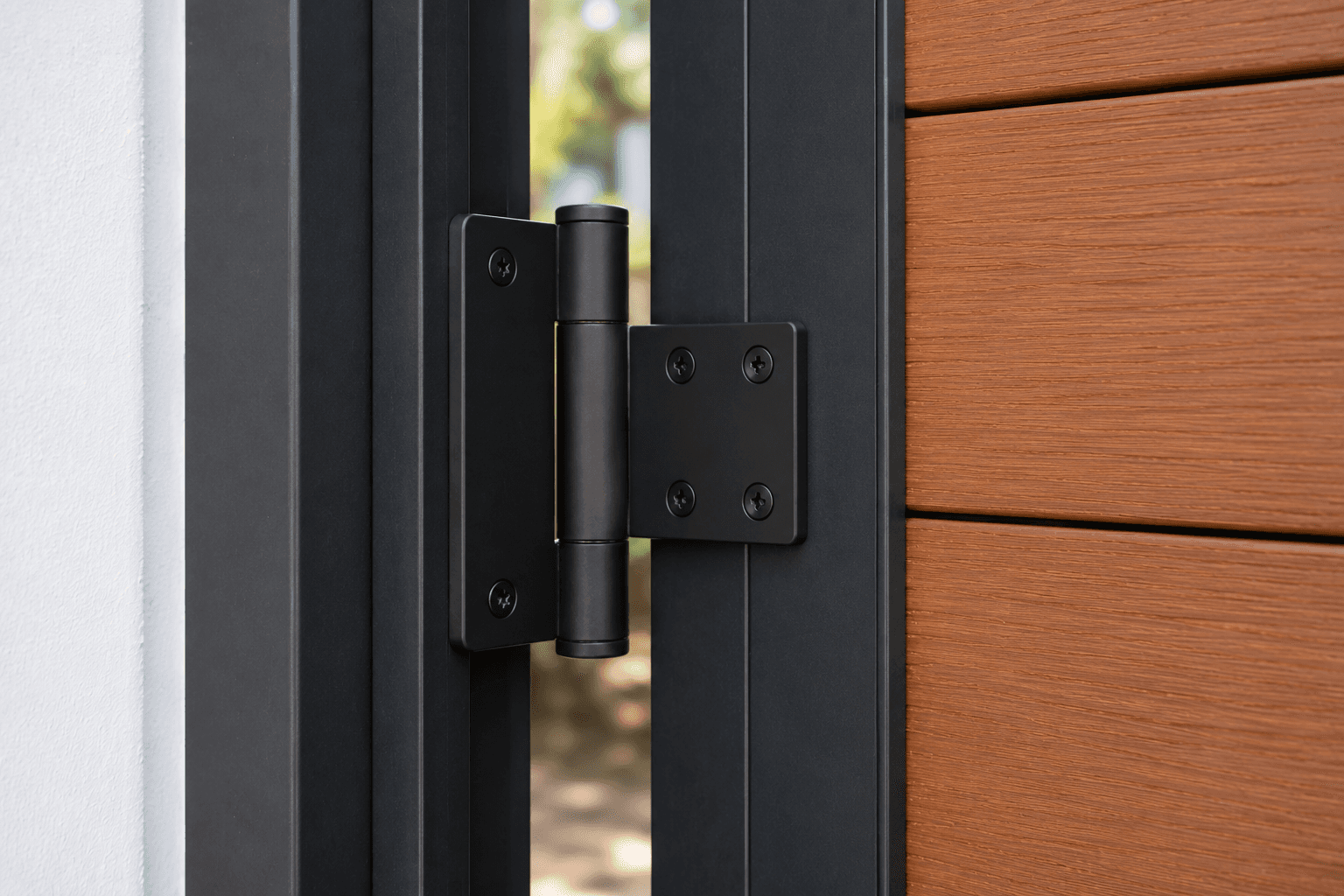
CEFB-02 gate and hardware detail from the FastFence product page. Confirm the components available for the selected gate configuration.
Gates should not be treated as a standard fence panel with hinges added later. Gate width, weight, post requirements, frame design, clearances, hardware, and installation conditions should be reviewed together.
4. Mark corners, ends, and connection points
Use a simple plan view to show where the fence starts, stops, turns, and connects to another element. Note whether each turn is approximately 90 degrees or an unusual angle. Identify sections that terminate against a building, masonry wall, existing fence, or separate gate post.
These conditions influence the material package. Two projects with the same total footage can require different quantities because one is a single straight run and the other contains several corners, short returns, and gates.
5. Document slopes and site conditions
Photograph the full fence line from both directions. Include close-ups of grade changes, retaining walls, concrete, landscaping, utilities, drains, trees, narrow access points, and existing structures.
Tell the supplier or installer whether the ground is generally level, gradually sloped, or sharply stepped. Do not assume that every fence system handles slope in the same way. The selected product's installation documents and the field conditions determine whether a stepped, racked, cut, or other project-specific approach is appropriate.
For replacement projects, also state whether demolition and disposal are part of the requested scope. Those services affect an installed-project price but may not belong in a materials-only quote.
6. Identify the exact product series and finish
“Composite fence” describes a broad product category. A useful quote should identify the actual product series, profile, finish, and compatible system components.
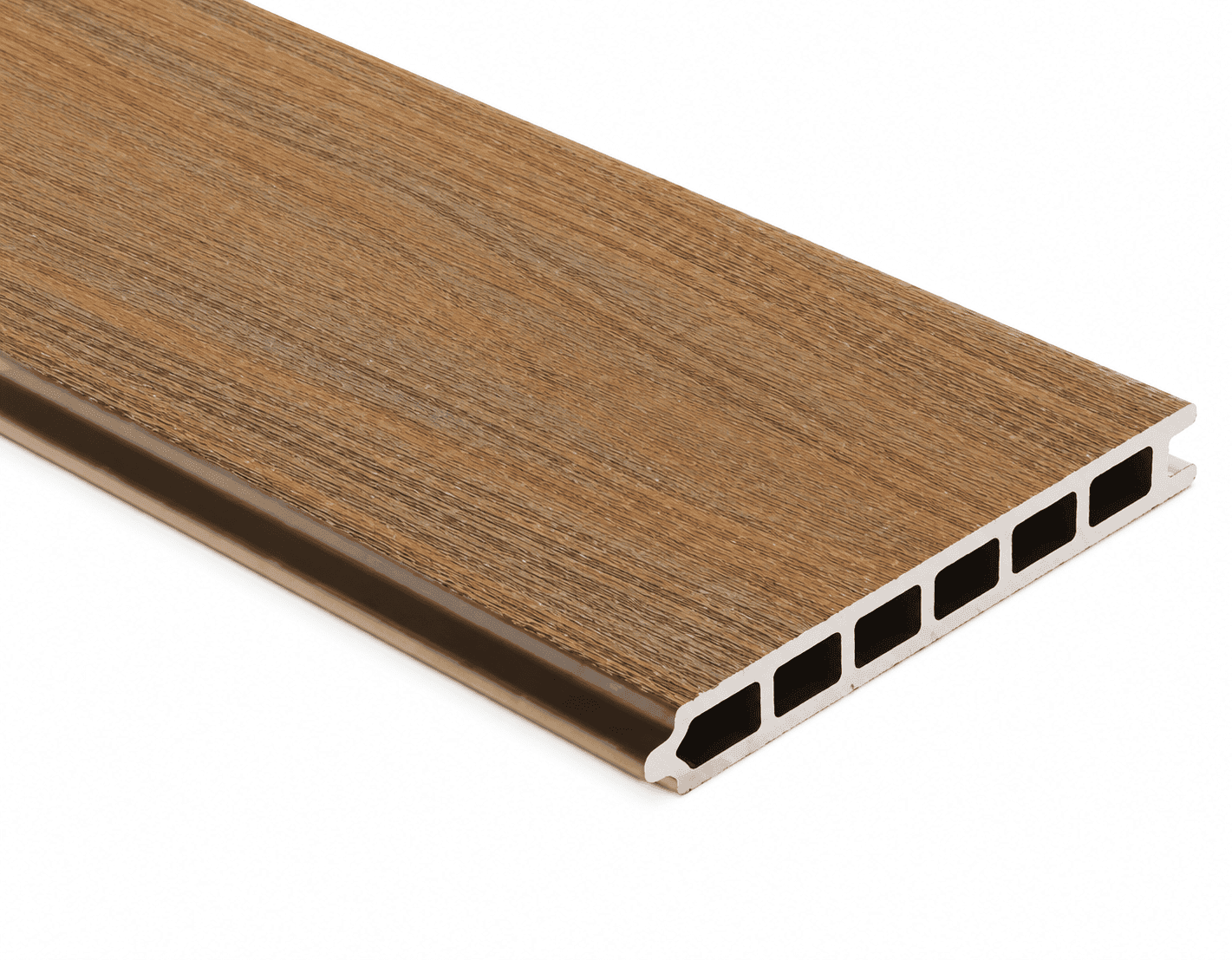
CEFB-02 board profile from the FastFence product page. Use the current product specification when reviewing dimensions and system requirements.
If the finish has not been selected, request current physical samples. Review samples outdoors in direct light and shade, and confirm that the sample belongs to the same product series being quoted. Screen colors and photography can help narrow options but should not be treated as an exact physical match.
7. Clarify whether you need materials only or installation
State the requested scope in the first message. Useful descriptions include:
Materials-only quote for pickup.
Materials-only quote with delivery.
Trade or dealer supply inquiry.
Budgetary material estimate for design development.
Installed-project discussion or contractor referral request.
Material cost and installed project cost are different. An installed price may include demolition, disposal, layout, excavation, concrete, post setting, cutting, gates, labor, equipment, access constraints, permitting, and site restoration. A materials-only quote should make clear which physical components, freight, and taxes are included.
8. Provide delivery and access details
For delivery pricing, send the destination ZIP code and, when appropriate, the full delivery address. Describe access limitations such as a narrow road, gated property, limited unloading area, steep driveway, active construction site, or scheduled receiving hours.
Ask how the order will be packaged, who is responsible for unloading, and how damaged or missing items should be reported. Confirm these details before placing the order rather than relying on general delivery language from an earlier project.
9. Share the project schedule
Provide the target date for final selection, order placement, site delivery, and installation. Ask the supplier to confirm current stock or production status for the exact product and quantity.
A quoted lead time is meaningful only when it is tied to a specific order, destination, and date. Availability can change, so reconfirm timing when the order is ready to proceed.
10. Ask for the documents behind the quote
Before ordering, request the current documents relevant to the selected system:
Product specification or technical sheet.
Installation guide.
Written warranty and eligibility terms.
Care and maintenance instructions.
Applicable test reports or certifications.
Packing list or component schedule.
Check that every document refers to the product series being quoted. A warranty, test report, or installation detail for another profile should not automatically be treated as applying to the selected fence.
What should an itemized composite fence quote show?
An itemized quote should make it possible to understand the proposed system and compare it with another offer. Depending on the project, look for:
Exact fence product series and finish.
Board, panel, or infill quantities.
Line, corner, end, and gate posts.
Rails, channels, trims, caps, brackets, and fasteners.
Gate frames, hinges, latches, and other hardware.
Spare material or waste allowance, if included.
Packaging, freight, taxes, and unloading terms.
Confirmed exclusions.
Quote validity period and payment terms.
Estimated availability or delivery timing.
If a quote lists only a single total, ask for enough detail to confirm that both suppliers are pricing the same scope.
Common quote-request mistakes
Sending only total linear footage
A single total hides corners, end points, gates, disconnected runs, and height changes. Send a run-by-run sketch instead.
Leaving gates until later
Gate requirements can change posts, hardware, layout, and cost. Include every opening from the beginning.
Comparing different system scopes
One price may include posts, trims, freight, and gates while another covers only fence boards. Compare line items and exclusions, not just totals.
Using an old product sheet
Specifications, finishes, packaging, documents, and availability can change. Confirm the current information for the exact series.
Treating online photos as color approval
Ask for a physical sample and view it under the project's real lighting conditions.
Copy-and-paste composite fence quote template
Use this template for an initial inquiry:
Project location / delivery ZIP code:
Buyer type: homeowner / contractor / builder / dealer / other
Scope requested: materials only / delivery / installation discussion
Fence runs:
Finished height by run:
Gates and clear opening widths:
Corners, ends, and transitions:
Slope or grade conditions:
Preferred product and finish:
Target order date:
Target delivery or installation date:
Attachments: marked plan, measurements, and site photos
Questions or special requirements:
The first quote may still require clarification, but this template gives the supplier a useful starting point.
Frequently asked questions
Can I get a composite fence quote without final measurements?
Yes, a supplier may be able to provide a budgetary estimate from approximate dimensions. Label the dimensions as preliminary and expect the final material takeoff to change after field verification and product selection.
How much extra material should I order?
There is no universal waste percentage for every fence project. Cuts, damaged pieces, short runs, corners, slopes, pattern requirements, packaging, and installer preference all affect the allowance. Ask the supplier and installer to review the actual layout.
Does a material quote include installation?
Not unless the quote explicitly says so. Confirm whether the scope is materials only, delivery, contractor referral, or a separate installed-project proposal.
What is the fastest way to improve quote accuracy?
Send a marked plan with separate run lengths, fence heights, all gate openings, clear site photos, the delivery ZIP code, and the desired product or sample request. Then ask for an itemized list of inclusions and exclusions.
Request a project-based FastFence quote
Review FastFence composite fence products and the CEFB-02 product page. When you are ready, send the project ZIP code, run-by-run measurements, finished height, gate requirements, site photos, finish preference, and timeline through the FastFence composite fence supplier page.
For specifications and installation information, also check the current FastFence product guides and manuals.


