
A WPC fence is a type of composite fence made with wood material and a thermoplastic matrix, usually with additional ingredients that support manufacturing or performance. “Composite fence” is the broader term: it describes fencing made by combining more than one material, so WPC belongs inside that category. In product listings, however, WPC fence and composite fence are often used interchangeably. Buyers should therefore look beyond the label and compare the actual board construction, cap layer, dimensions, posts, rails, gates, installation documents, warranty terms, and supply support. Those system details matter more than whether a seller chooses the word “WPC” or “composite.”
WPC fence vs. composite fence at a glance
Term | What it usually means | What the name does not confirm |
|---|---|---|
WPC fence | A wood-plastic composite fence whose core combines wood-derived material with thermoplastic | Exact formulation, cap coverage, profile size, structural design, warranty, or installation method |
Composite fence | A broad category of fence products made by combining two or more materials | Whether the product contains wood, what polymer is used, or whether it is capped |
Capped composite fence | A composite core with an outer protective polymer layer on one or more surfaces | Cap thickness, number of covered sides, UV performance, color change, or warranty coverage |
Complete fence system | Boards or panels plus the compatible posts, rails, trim, gates, hardware, and installation details | Whether every component is included in a quoted material package |
The practical takeaway is simple: compare a documented fence system, not a marketing label.
What is WPC fencing?
WPC stands for wood-plastic composite. The U.S. Forest Products Laboratory describes wood-thermoplastic composites as materials that combine wood elements with thermoplastics and other ingredients. The wood component may be fiber, flour, or another processed form, while the plastic component helps bind the material into a manufactured profile.
In fencing, the WPC material is commonly formed into boards or panels and then used with compatible structural and finishing components. The exact recipe and profile design vary by product. That variation is why two products described as “WPC fence panels” can differ in surface construction, dimensions, weight, fastening method, color options, documentation, and warranty.
Buyers should request the current technical sheet for the exact product series instead of assuming that every WPC board has the same composition or performance.
What does “composite fence” mean?
“Composite fence” is an umbrella term rather than a single recipe. In ordinary purchasing language, it often refers to boards that combine wood-derived material with a polymer, which is why sellers may use “composite” and “WPC” for the same product. Technically, though, a composite is simply a material made from two or more constituent materials.
That means the phrase composite fence does not answer several important buying questions. It does not tell you the wood-to-polymer ratio, whether the profile is hollow or solid, whether the board has a cap layer, how the board connects to posts and rails, or which gates and accessories are compatible.
When comparing quotes, make sure each supplier identifies the actual product series and provides the corresponding specification and installation documents.
Are WPC and composite fencing the same thing?
In many fence catalogs, the two terms describe the same product family. A supplier may call a board “WPC fencing” on a technical page and “composite fencing” on a category page because buyers search using both terms.
The most accurate relationship is:
WPC fencing is a form of composite fencing.
Composite fencing is the broader category.
A product name alone is not enough to compare two systems.
If two suppliers both offer a “composite privacy fence,” compare the technical documents line by line. Check the profile dimensions, cap coverage, post and rail system, gate compatibility, surface finish, fastening method, installation guide, test reports, and written warranty. A clear comparison prevents two materially different packages from being treated as equivalent simply because both use the word “composite.”
What does capped composite fencing mean?
A capped composite board has an outer polymer layer applied around part or all of the composite core. Suppliers may describe a board as one-sided, two-sided, three-sided, or four-sided capped, depending on which surfaces receive the outer layer.
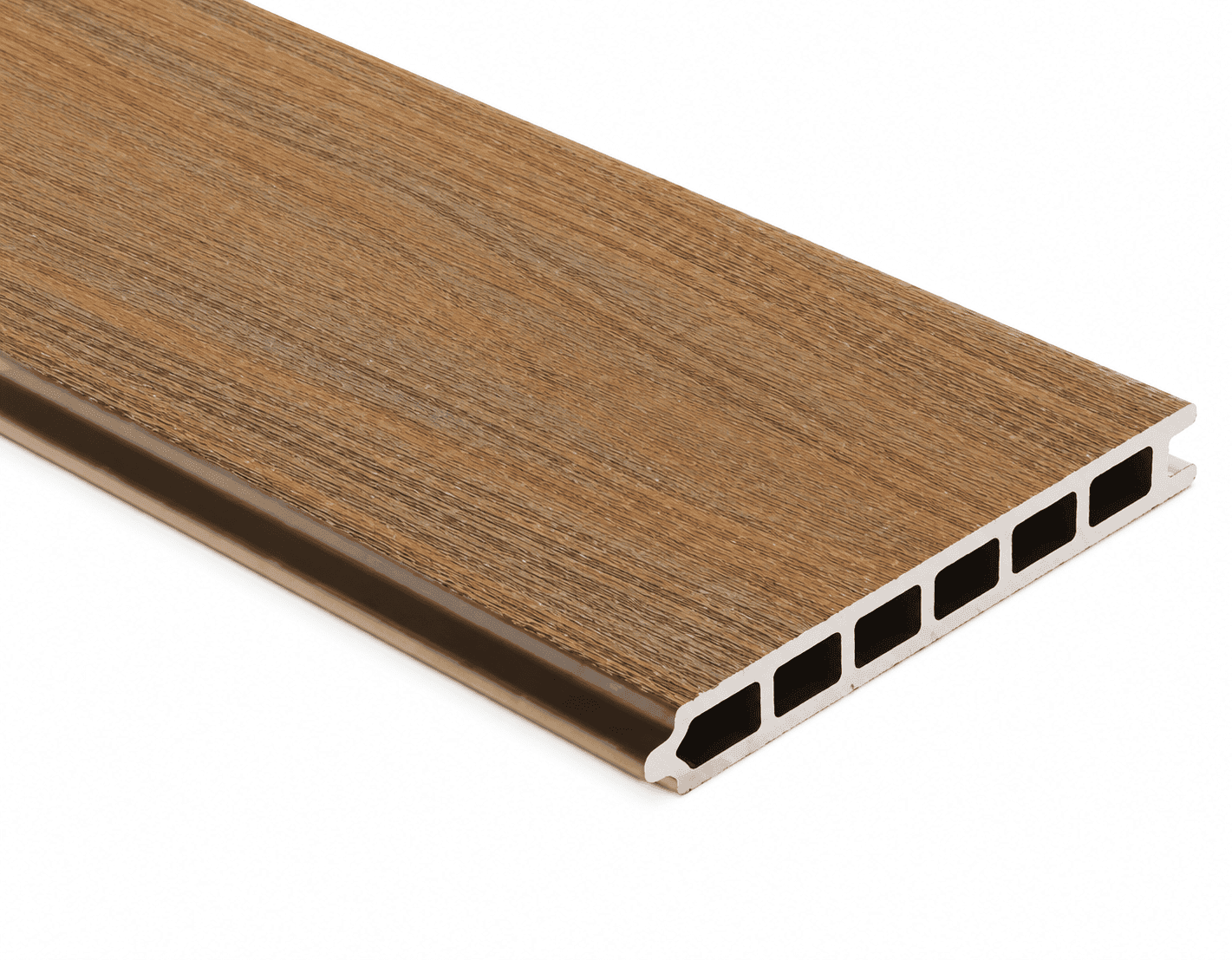
CEFB-02 board-profile image from the FastFence product page. The photograph shows the product profile; confirm cap coverage through the current technical specification.
The phrase four-sided capped describes coverage, not a complete performance guarantee. Buyers should still ask for a cross-section, current product specification, installation instructions, applicable test reports, and the written warranty for the exact series. The cap design should also be considered as part of the complete fence system because field cuts, fastening details, rails, posts, drainage, and installation quality can affect the finished project.
FastFence currently presents CEFB-02 as a four-sided capped fence profile. Confirm current dimensions, available finishes, installation requirements, and applicable performance documentation for the exact order and project.
Which specifications should buyers compare?
1. Board construction
Ask whether the profile is hollow or solid, how the cap is applied, which sides are covered, and whether the supplier provides a physical cross-section or sample. Do not assume that a heavier board, a thicker-looking wall, or the word “premium” proves that one system is better. Product design needs to be evaluated together with the supporting posts, rails, fasteners, and installation requirements.
2. Profile dimensions
Confirm the exposed width, thickness, available length, and the way boards stack or connect. These measurements affect panel height, the number of boards required, cutting plans, transportation, and waste. Use the current technical sheet rather than dimensions copied from an old listing or a different product series.
3. Complete system components
A fence order may require more than boards. Depending on the system and project layout, the material package may include line posts, corner posts, end posts, rails, channels, trims, caps, brackets, fasteners, gate posts, pedestrian gates, driveway gates, and other accessories.
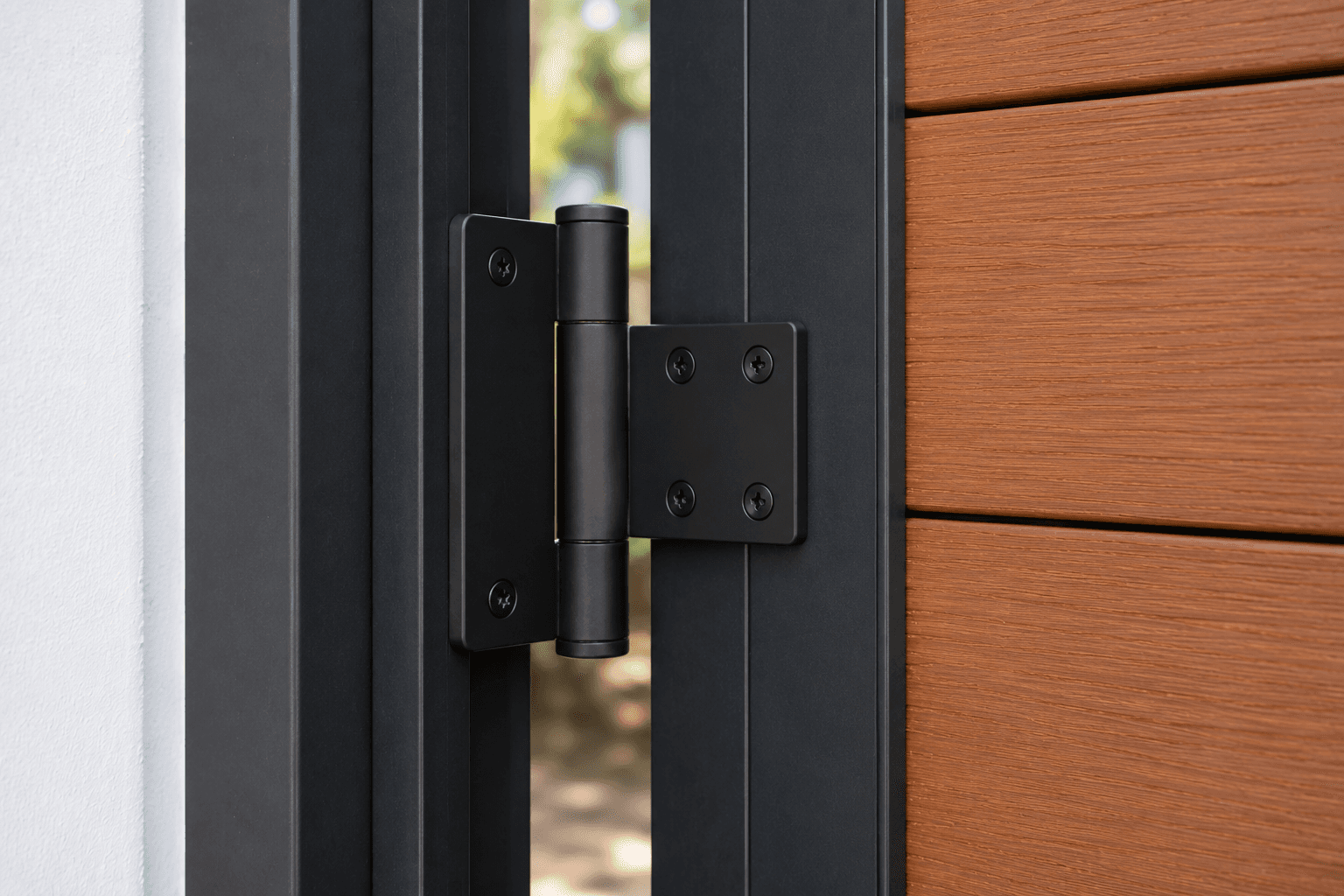
CEFB-02 gate and hardware detail from the FastFence product page. Confirm component availability for each quote.
Ask the supplier to review the full layout rather than quoting a board quantity alone.
4. Finish and color
Digital photos are useful for screening options, but monitors, lighting, and rendering can change the appearance of a finish. Request a physical sample and review it outdoors in both direct light and shade. Confirm whether the sample represents the current production finish and product series.
5. Installation information
Request the current installation guide before ordering. Confirm maximum spans or post spacing, required clearances, fastening details, gate requirements, handling instructions, and any project-specific limitations. Installation guidance should be reviewed by the person responsible for the actual site and local requirements.
6. Warranty and test documents
Do not rely on a warranty duration displayed without its terms. Confirm which product is covered, who is eligible, whether residential and commercial coverage differs, what exclusions apply, and how a claim must be documented.
Likewise, a test report should identify the tested specimen and standard. A report for one formulation, profile, or assembly should not automatically be treated as proof for every product sold under the same broad category.
7. Availability and logistics
For contractors and project buyers, the material label is only part of the decision. Confirm current availability, order quantity, packaging, pickup or delivery options, destination ZIP code, expected project date, and the process for replacing a damaged or missing component.
Is WPC fencing better than wood fencing?
There is no universal winner for every project. WPC fencing is often considered when a buyer wants a manufactured profile, a repeatable finish, and less routine refinishing than many natural-wood fence systems. Wood may be preferred for its natural material character, local familiarity, repair options, or a specific architectural requirement.
The correct comparison depends on the exact products and the site. Buyers should evaluate initial material cost, installation system, expected maintenance, finish options, component availability, repairability, warranty terms, and local project requirements. Any lifespan or lifecycle-cost comparison should be based on documented products and realistic local assumptions rather than a generic claim that one material always lasts longer or always costs less.
For a Bay Area project, the comparison should also separate material supply from installed project cost. Labor, demolition, grading, access, gates, post setting, and contractor scope can change the installed price independently of the fence-board material.
What information should you send for a fence material quote?
Provide enough information for the supplier to review the entire system:
Project address or destination ZIP code.
Total linear footage, separated into individual fence runs.
Desired finished height.
Number and approximate width of pedestrian or driveway gates.
Corners, end points, elevation changes, and sloped sections.
Photos, drawings, or a marked site plan.
Preferred color or a request for samples.
Buyer type: homeowner, contractor, builder, dealer, or project purchaser.
Target order and delivery dates.
Whether the request is for materials only or also requires a referral or separate installation discussion.
This information helps the supplier review panels, posts, gates, trim, accessories, quantity, and logistics together instead of producing an incomplete board-only estimate.
Questions to ask before choosing a system
What is the exact product series and current specification?
Is the profile WPC, another type of composite, or a different material entirely?
Is the board capped, and which sides are covered?
What are the exposed width, thickness, and available length?
Which posts, rails, trims, gates, and fasteners are compatible?
Can I receive a current physical sample?
Are installation guides and applicable test documents available?
What does the written warranty cover for my customer type?
What information is required for an accurate material takeoff?
What are the confirmed pickup, delivery, packaging, and lead-time terms for my order?
Frequently asked questions
Is every composite fence a WPC fence?
No. WPC is one type of composite material. In the fence market, the terms frequently overlap, but “composite” is broader. Verify the actual material and product specification.
Is WPC fencing the same as vinyl fencing?
Not generally. WPC contains a wood-derived component combined with thermoplastic, while vinyl fencing is typically associated with PVC-based profiles. Compare the actual technical documents rather than relying on category names.
Does a four-sided cap mean the fence is maintenance-free?
No fence should be assumed to be maintenance-free based only on the cap description. Follow the product's cleaning, inspection, installation, and care instructions, and confirm the warranty terms for the exact system.
Can homeowners buy WPC fence materials directly?
Supplier policies vary. FastFence serves project inquiries from trade buyers and homeowners; current product availability, samples, pickup, delivery, and quote requirements should be confirmed for the specific project.
Compare the complete fence system
The difference between “WPC fence” and “composite fence” is useful terminology, but it should not drive the purchasing decision by itself. Compare the documented board construction, cap coverage, dimensions, components, installation method, finish samples, warranty, and supply process.
Explore FastFence composite fence panels and system options, or send your project ZIP code, linear footage, height, gate requirements, and timeline to request a project-based material quote.


