
For most privacy-fence buyers, the better choice is not decided by the word “composite” or “vinyl.” It is decided by the complete system: panel construction, posts, rails, gates, hardware, installation details, documentation, and the supplier’s ability to support the job. Composite fencing is often selected for a wood-inspired appearance and a substantial privacy profile; vinyl fencing is often selected for a familiar, light-colored, low-maintenance system. Compare the exact products and the full installed scope before choosing.
Composite fence vs. vinyl fence at a glance
Decision point | Composite fence | Vinyl fence | What to verify |
|---|---|---|---|
Appearance | Often offered in wood-inspired colors and textures | Commonly associated with smooth white or solid-color panels | View current samples outdoors |
System weight and handling | Profiles may be denser and heavier | Components may be lighter | Crew size, unloading, cutting and lifting plan |
Maintenance | Usually cleaned with water and mild soap according to the manufacturer | Usually cleaned with water and mild soap according to the manufacturer | Written care guide and excluded chemicals |
Privacy | Available as solid or near-solid panel systems | Available as solid privacy panels | Actual gaps, panel height and grade changes |
Gate planning | Requires compatible posts, frame and hardware | Requires compatible posts, frame and hardware | Opening size, swing, latch, hinges and reinforcement |
Documentation | Product-specific installation and warranty documents matter | Product-specific installation and warranty documents matter | Current drawings, limitations and local requirements |
Best fit | Buyers prioritizing wood-look privacy and a coordinated exterior palette | Buyers prioritizing a conventional vinyl appearance | Compare total installed cost, not panel price alone |
There is no universal winner. A good specification begins with the project conditions and ends with a bill of materials that covers every transition, corner, end post and gate.
1. Start with the look the project actually needs
Material names do not describe the finished elevation. Ask for current physical samples and look at them in morning and afternoon light. Compare color variation, surface texture, reflectivity, board width, seam pattern and the appearance of posts and caps. A fence can look convincing in a close-up sample but very different across a 100-foot run.
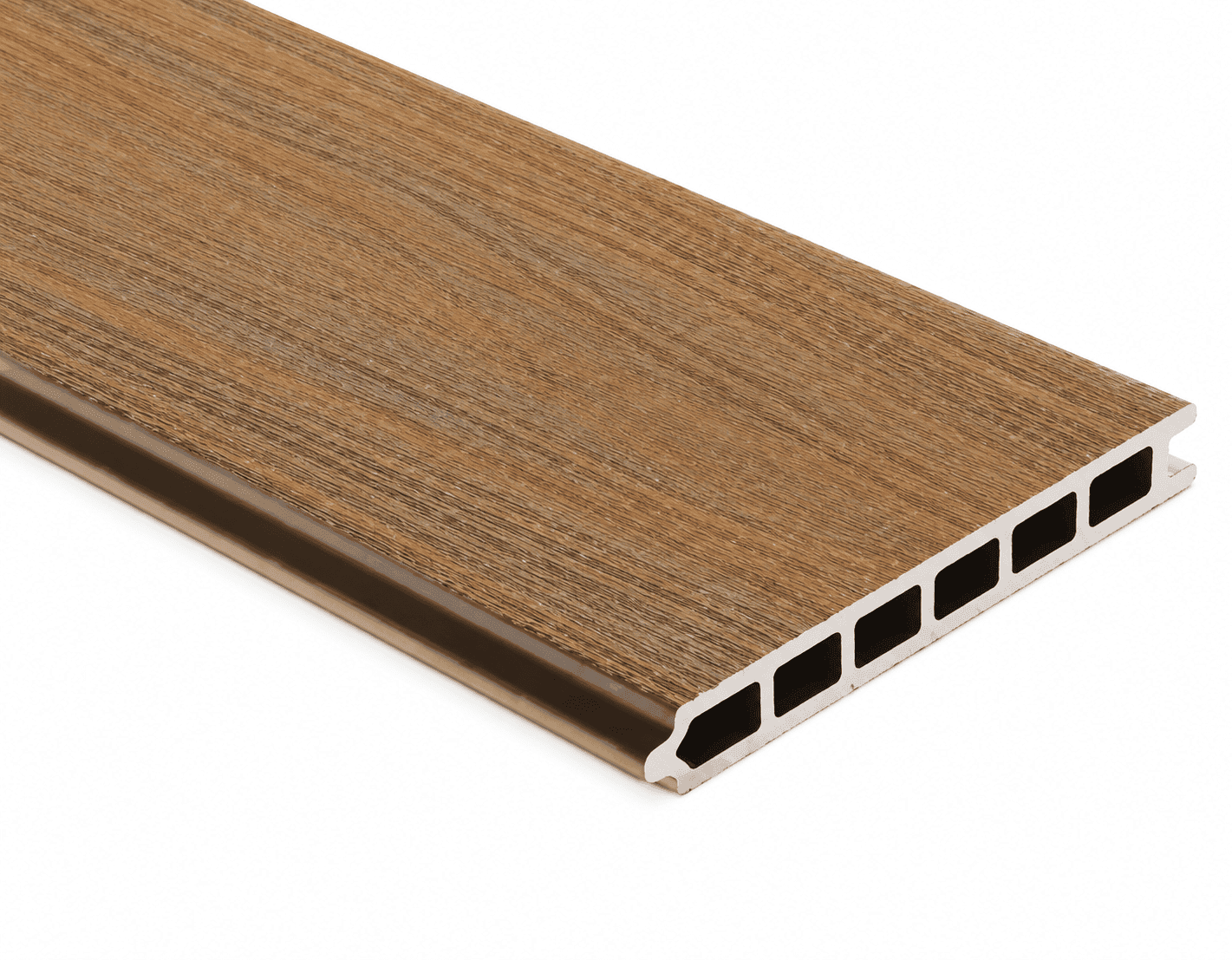
FastFence’s composite fence systems are designed as coordinated assemblies rather than isolated boards. The CEFB-02 product page is a useful starting point when the project calls for a contemporary privacy fence with a wood-inspired face.

2. Compare the complete assembly, not a single panel
A fence quote can appear lower because important components are missing. Ask every bidder to identify the board or panel, posts, rails or channels, post caps, bottom support, trim, fasteners, concrete assumptions and waste allowance. For sloped sites, confirm whether the design steps or racks and how that changes quantities.
For a composite option, review the exact CEFB-02 product configuration and request the latest product data before ordering. For a vinyl option, request the same level of detail from that supplier. Do not assume that two six-foot privacy fences use equivalent post spacing, reinforcement or hardware.
3. Treat the gate as its own engineered opening
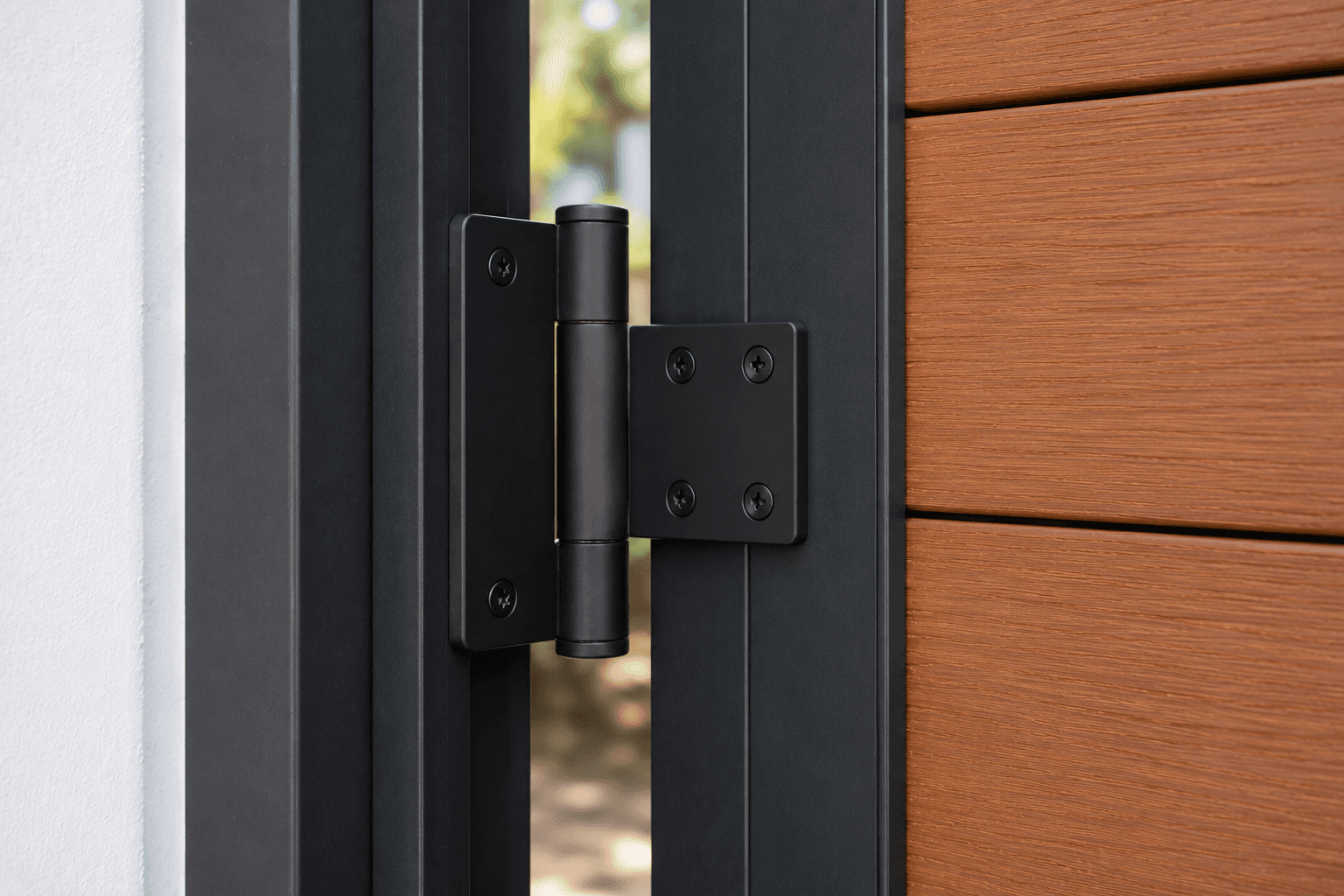
Gates concentrate loads and movement at hinges, latches and posts. Confirm the clear opening, leaf width, swing direction, ground clearance, frame construction, hinge type, latch, drop rod, stop, post reinforcement and expected use. A residential walk gate and a frequently operated double driveway gate should not be specified as if they were the same condition.
Review FastFence’s fence gate options when building the scope. If an automatic operator, access control or pool enclosure is involved, the designer and installer should verify the applicable rules and the compatibility of every component.
4. Compare maintenance instructions—not just “low maintenance” claims
Both composite and vinyl systems are commonly marketed as lower-maintenance alternatives to regularly refinished wood. That does not mean maintenance-free. Dust, irrigation residue, organic debris and jobsite contaminants still need attention. Ask for the written cleaning method, approved products, stain-removal procedure and restrictions before the owner takes possession.
Wood-plastic composites are a broad category with different formulations. Research from the U.S. Forest Products Laboratory notes that moisture, sunlight, temperature and biological factors can affect long-term performance. That is why a product-specific care guide and warranty are more useful than a generic material comparison.
5. Check exposure, layout and installation conditions
Record wind exposure, grade changes, soil conditions, irrigation, property lines and nearby structures. Confirm post depth and footing requirements with the appropriate professional and local authority. The supplier’s standard detail is an input, not a substitute for project-specific design where engineering or permitting is required.
Before pricing, create a simple elevation with total length, fence height, corner count, end conditions and gate openings. FastFence’s composite fence quote checklist explains the information that makes supplier quotes easier to compare.
6. Evaluate privacy and sound expectations realistically
A solid-looking panel can improve visual privacy, but actual privacy depends on board joints, grade transitions, clearances and gate gaps. Ask for photos of completed installations and inspect the back side as well as the front.
Do not promise a specific sound reduction unless the complete assembly has relevant test data. Fence height, continuity, mass, openings and the relationship between the source and receiver all influence acoustic results.
7. Compare total installed cost
Panel price is only one line in the budget. Include freight, unloading, taxes, posts, rails, caps, fasteners, concrete, equipment, labor, waste, gates, site preparation and disposal. Then include planned maintenance over the ownership period. A clear total-cost comparison often changes the decision.
For contractor or dealer pricing, the trade composite fence supplier page outlines FastFence’s B2B support. Availability, lead time and freight should still be confirmed for the specific quote.
8. Request current documents before approval
Ask for the latest product data, installation instructions, warranty terms, color sample and system drawing. Confirm who is responsible for field measurements and whether substitutions are permitted. Download available materials from the FastFence resources page, then request anything missing in writing.
Which fence should you choose?
Choose the system that best matches the project’s appearance, complete assembly, gate requirements, documented installation method, budget and supplier support. Composite may be the stronger candidate when a wood-inspired privacy aesthetic is important. Vinyl may be the stronger candidate when a traditional vinyl look or an existing matching system drives the decision. In either case, compare named products and written scopes.
For a product-specific recommendation, send the fence length, height, site photos, ZIP code and gate sizes through the FastFence contact page. Ask for samples before final color approval.
Frequently asked questions
Is composite fencing better than vinyl fencing?
Not automatically. “Better” depends on appearance, system design, installation conditions, maintenance instructions, documentation, availability and installed cost. Compare exact products rather than material labels.
Does composite fencing require maintenance?
Yes. It should be inspected and cleaned according to the manufacturer’s current instructions. Low maintenance does not mean no maintenance.
Can composite fencing be used with a gate?
Yes, when the gate, frame, posts, hinges and latch are designed as a compatible system. Confirm the opening and usage with the supplier and installer.
What information is needed for a fence quote?
Provide total length, height, layout, corners, end conditions, grade changes, gate openings, site access, delivery location and desired color. Photos or a simple marked plan are helpful.


